An IT support triage checklist for on-call teams
A support line is easier to operate when the first conversation has agreed context, a standard question path, and a clear point for human judgment.
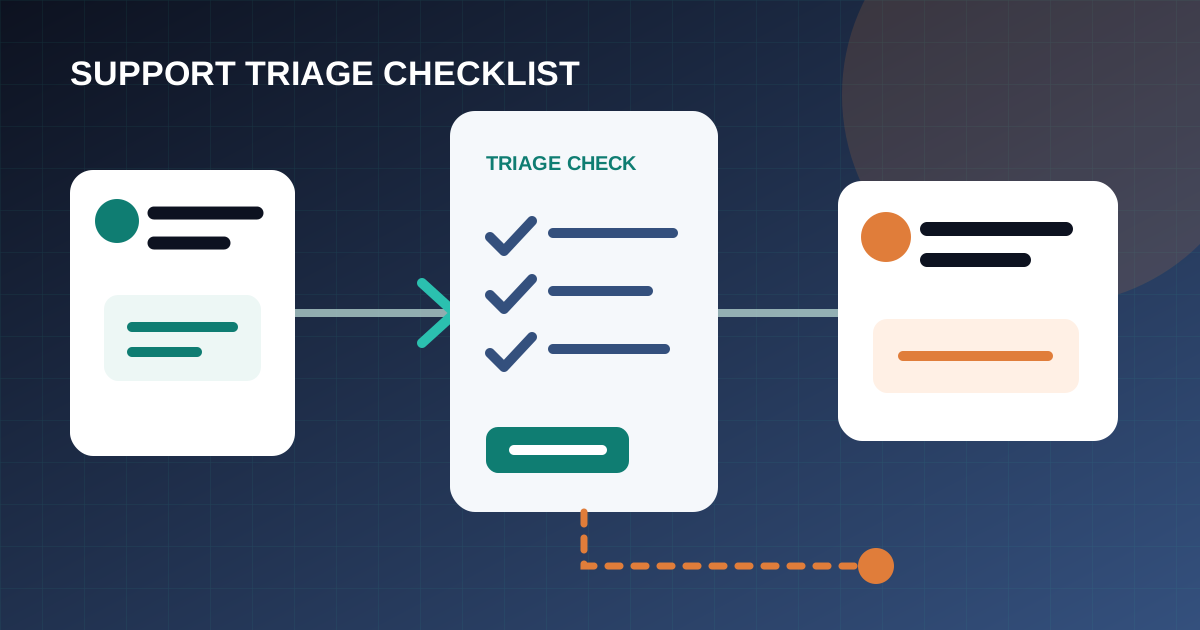
An on-call path begins before an engineer receives a call. The support team needs to agree on what the first conversation should capture, which common questions have an approved route, and when the call should move to a person. That is triage design, not a diagnosis or a severity decision.
Capture the context the next person needs
Start with the caller’s stated issue and the details the support operation uses to choose its next path. Keep the list focused on information that changes the next action. A longer intake is not necessarily a better one if the next team cannot use the details it collects.
- the caller’s reason for contacting support;
- the approved details that help distinguish a standard route;
- the next owner or path the team has defined; and
- the cue that means a person should review the conversation.
Separate a standard question from an escalation
Some support calls can follow an approved answer or intake path. Others need a member of the team to decide what happens next. Define that boundary in the call flow so the first response can preserve context without acting as if it can make the support judgment for the organization.
A support intake is useful when it gives the next person a clear starting point, not when it tries to make the technical decision for them.
Make the on-call handoff understandable
When a call reaches the on-call path, carry forward the caller’s reason and the relevant details already gathered. The receiving person should be able to understand why the call reached them and what has been discussed, while retaining responsibility for the next decision.
Review the checklist with the people who use it
Support processes change as teams and responsibilities change. Reviewing the checklist with the people who receive calls helps keep the standard paths useful and makes sure unclear calls still have a visible route for human review.
My Agile CIO helps IT and support teams design first-line intake and escalation routes around their own operating model. Explore How It Works, see the support-line FAQ, or talk through your support-call path.