A practical after-hours support intake
A calm first response starts with the context a support team needs before it chooses the next route.
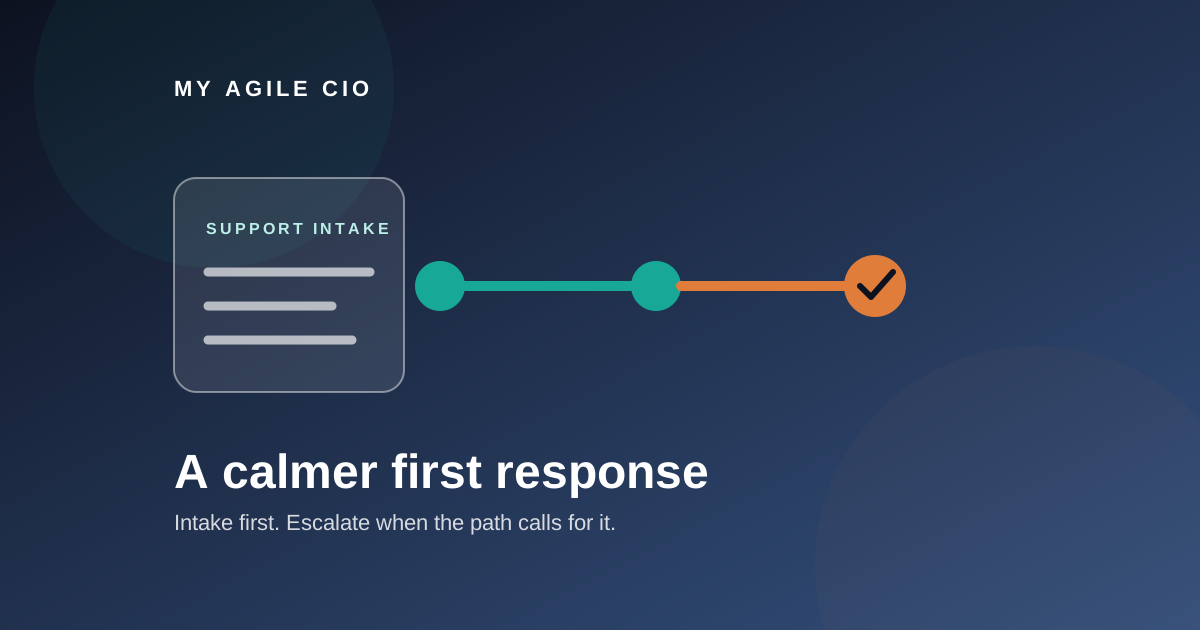
After-hours support calls are not all the same. Some callers need an approved answer to a common question. Some need their issue captured for the next team. Others need the on-call or human path the operation has already defined. A useful first line begins by making those routes deliberate.
Capture context before choosing the route
The first response should ask the approved intake questions that help the next person understand the issue. The right details depend on the support operation, but the goal is consistent: record the caller’s context while it is clear, then apply the route the team has chosen.
- Identify the caller and the support issue in the team’s approved terms
- Capture the intake details needed for the next support step
- Follow a configured common-answer or status path when appropriate
- Move urgent or complex conversations to the human escalation route
Separate routine questions from escalation
A practical flow does not pretend to diagnose every technical problem. It distinguishes the calls that can follow an approved response from the calls that need ticket intake, a queue, or a person. Defining that boundary before the call arrives makes the handoff clearer for both the caller and the team.
The first line of support should reduce uncertainty for the caller and noise for the technical team.
Make the next team’s work easier
My Agile CIO is built for the first part of the helpdesk conversation: inbound answering, triage, ticket intake, routing, and the on-call path your operation defines. The human team stays responsible for the diagnosis and service decisions that follow.
Explore how the support workflow works and the My Agile CIO FAQ, or book a walkthrough to map your after-hours intake and escalation path.